




























The Evolution of VoIP Into Modern Communications

    Published July 10, 2026
    (Last updated July 10, 2026)

    VoIP is dead

    The Death of VoIP

    VoIP is dead. There is no visitation on the cloud. In lieu of flowers, please press 1 to pay your respects now or leave a voicemail at the tone. Your grief is very important to us.

    Wait a minute. Why would net2phone, one of the pioneers of VoIP with more than 30 years in the telecommunications industry, make such a bold, startling statement?

    We stand by what we said; VoIP is dead… but not in the way you might think.

    Continue reading for an exploration of VoIP, its evolution, and how we see it today.

    What is VoIP?

    We can’t dive into the death of VoIP without first explaining what it is. VoIP, or Voice over Internet Protocol, enables the transmission of voice over an internet connection rather than a traditional, physical telephone landline.

    A VoIP phone system first converts a speaker’s voice from audio waves into digital data, it then sends that data to its destination via a network connection. If that destination is a regular telephone network, the signal is converted back to a telephone signal before it arrives there.

    In this way, VoIP is a foundational technology for “cloud communications.” When people say “it’s on the cloud,” they mean electronic data is stored, accessed, and transmitted on remote servers over the internet, rather than on your computer’s hard drive or office network.

    Instead of being tied to a specific location, area code, or device, VoIP calls can be made using a smartphone, tablet, laptop, desktop computer system, or traditional desktop-style phone,—as long as a stable internet connection is available.

    While there are many benefits of VoIP, the most significant include:

    • Cost savings on installing and maintaining physical infrastructure, of which there is often none required.

    • Flexibility to allow businesses to extend communications functionality to remote workers and geographically dispersed sites.

    • Scalability to increase and decrease the number of users and features in response to changing conditions.

    • Ease of implementation and overall use with features and functionality mere clicks away.

    • Simple number portability to keep the same phone numbers.

    • Advanced communication features like auto attendants, ring groups, and more.

    UCaaS Enters the Scene 

    UCaaS enters the scene

    After the introduction of VoIP, business communication solution providers began expanding even more. What if different communication methods like phone calls could be combined with others onto a single platform to consolidate them? Enter UCaaS. 

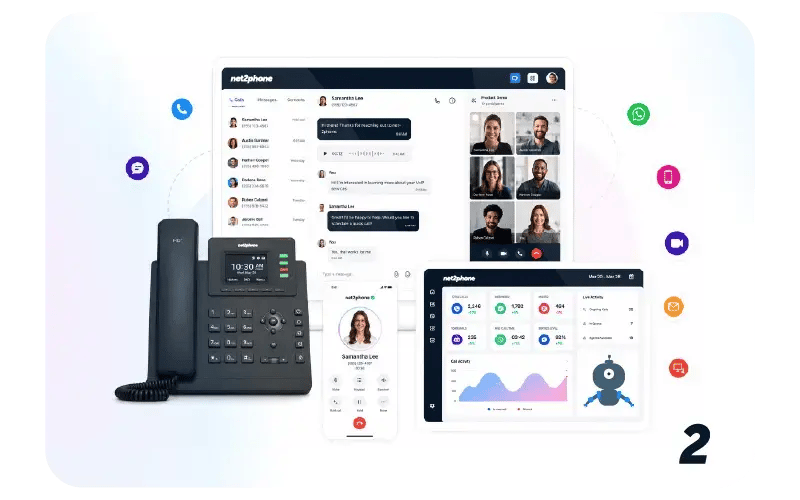
    Unified Communications as a Service (UCaaS) brings multiple aspects of enterprise communications, including voice, video, messaging, and voicemail, onto one single platform, thus “unifying” different communication methods. 

    With all-in-one UCaaS platforms, like Unite from net2phone for example, organizations don’t need to set up several different tools like a video conferencing solution or a messaging platform. These tools can be built into one solution and are integrated to communicate with each other.

    Some of the benefits of UCaaS include: 

    • Cost consolidation and savings with one vendor versus several.

    • Reduced costs of installation and maintenance with software and updates deployed via the cloud.

    • Enhanced mobility with technology that allows employees to connect from anywhere in the world.

    • Versatility to connect with customers via their channel of choice. 

    AI Changes the Game 

    AI changes the game

    Of course, as artificial intelligence arrived on the market for all industries, it wasn’t long before providers started asking how AI could be applied to business communications. 

    The answer came in multiple forms, which continue to evolve today. 

    AI-generated transcriptions of interactions became useful for more than just training new employees. AI tools can analyze interactions with customers to summarize them for managerial purposes and to identify key talking points or action items. This allows teams to focus more on interactions rather than diligent note-taking. Nothing is missed or forgotten because instead of trying to decode chicken scratch notes that were jotted down, the answer is right there, provided by AI. 

    AI is also now used as a workforce management tool, as is the case with net2phone’s AI Coach. AI can be used for sentiment analysis to identify if interactions are negative, positive, or neutral, helping organizations establish a baseline percentage and create goals. AI can also analyze interactions to identify if employees are using the right messaging or providing the best service to customers. It can pinpoint opportunities for improvement and ensure your team is all on the same page. 

    Customer Experience as a Service 

    Customer experience as a service

    All of these different but connected aspects come down to one common goal: enhancing the customer experience. Today’s customers expect more ways to connect with businesses and more personalization when they communicate with those businesses. 

    The way we see it? It is now a market for customer experience as a service, or CXaaS. Modern business communication solutions are really looking for new ways to enhance and improve the customer journey from beginning to end. 

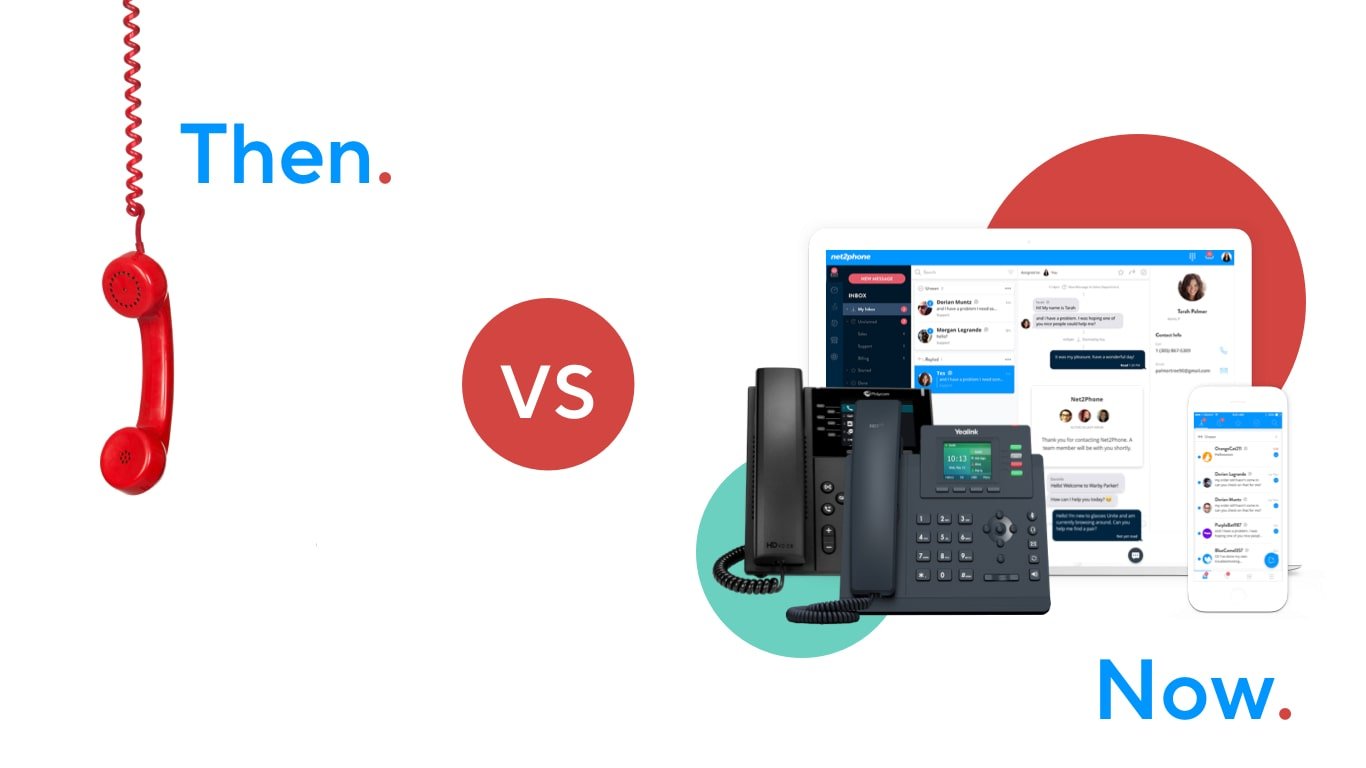
    So, is VoIP dead? Again, it’s not what you think. VoIP isn’t gone. This technology has merely evolved and paved the way for what we and many others now call modern business communications solutions. The foundational technology is still VoIP, but now it’s layered and stacked with so many other advancements and features. 

    The Bottom Line

    While providing voice services is still at the forefront of what we do, today, net2phone is so much more than that. We have developed our product suite as a full business communications powerhouse, providing solutions to deliver better customer experience at scale for businesses of all sizes. Our tools turn scattered tools into one connected workplace and one connected experience across every channel. 

    VoIP may be the basic technology that our tools operate on, but that term encompasses so much more for us now… UCaaS, CCaaS, CXaaS, AI, and more. So VoIP isn’t exactly dead, just obsolete.

    Frequently Asked Questions

    What is VoIP and how does it work?

    VoIP, meaning Voice over Internet Protocol, is a communication technology that enables the transmission of voice over an internet connection. VoIP phone systems convert a speaker’s voice from audio waves into digital data. They then send that data to its destination via a network connection.

    How has VoIP evolved over time?

    VoIP was introduced in the mid-1990s, allowing users to make phone calls using their computers with an internet connection rather than a physical landline. This allowed for much cheaper long-distance and international calls for businesses.

    Over time, it has evolved from a “nice to have” to a necessity for businesses looking to communicate effectively internally and externally with customers and stakeholders, cutting costs and enhancing business efficiency.

    What are the key milestones in VoIP development?

    VoIP originated as an experiment in the 1990s, transmitting voice over dial-up modems. In 1996, net2phone was one of the first companies to launch a softphone, offering PC-to-phone calls. 
    In the late 1990s, SIP trunking, or Session Initiation Protocol, was introduced to make communication more flexible than ever before, providing video conferencing, chat functionality, and more.  That brings us to the mid-2000s, when cloud CCaaS (Contact Center as a Service) solutions emerged, revolutionizing communication further.

    What is the future of VoIP technology?

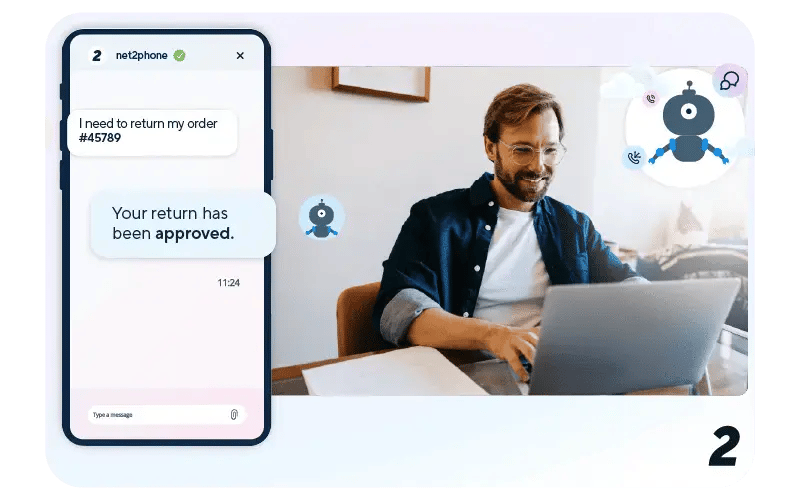
    Today, the basic functionalities of VoIP are still present, but have now evolved to include AI capabilities to enhance business processes even more. AI technology provides transcripts and insights from every interaction, allowing teams to focus more on building relationships rather than taking notes. net2phone’s AI Agent and Coach AI are AI tools designed to take businesses to the next level.

    We expect AI tools to continue to enhance VoIP technology in the coming years and to become essential for businesses hoping to remain competitive. 

    Curious to learn about how net2phone can enhance your business communications? Speak with one of our experts today!  

    Ashley Glovasky

    As a Digital Marketing and Communications Specialist at net2phone, Ashley usually has at least 50 tabs open, 5 different conversations on Slack going, and countless reminders in her notes app with random ideas for future use. She also manages net2phone's global social media presence.